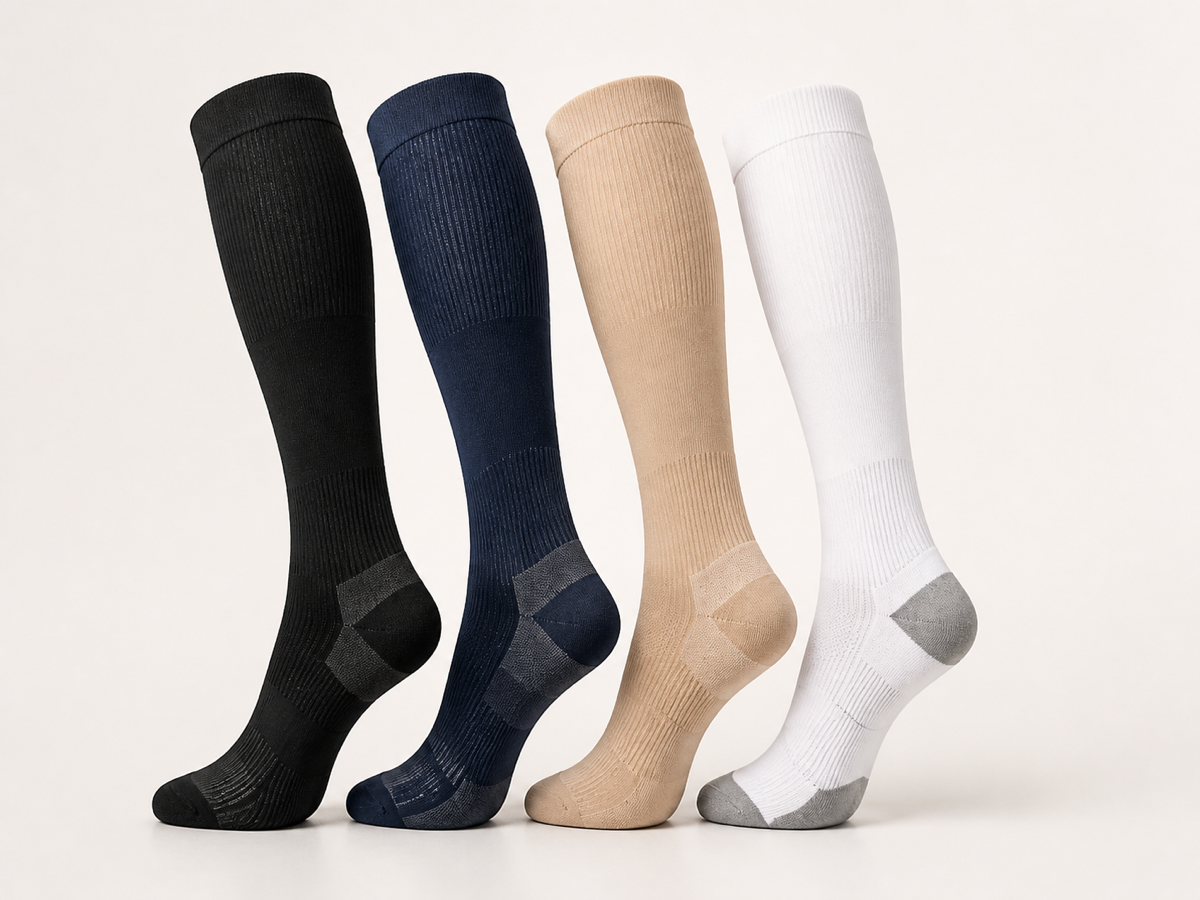
1. Define what wide calf means for the program
The buyer should describe the intended wearer, size architecture, destination market, and how the product will be selected at retail. ‘Wide calf’ can mean a separate size family, an extended range, or a style with a specific calf accommodation. These choices affect labeling and inventory.
Provide measurement references or an approved product when available. Do not assume that increasing one circumference will solve heel placement, overall length, cuff position, or foot fit.
2. Review the complete cuff-to-toe geometry
The cuff should sit at the intended height and work with the calf construction. The ankle zone, heel pocket, foot length, and toe should still locate correctly. If these areas are not coordinated, the sock may twist, pull, bunch, or place the design in the wrong position.
The requested compression program and size range should be developed together, with any required test or measurement route written into the brief.
3. Plan patterns and logos for larger circumferences
A Jacquard motif may need a different repeat, spacing, or scale to remain balanced across sizes. Large icons can stretch; small icons can become crowded. Logos near the cuff or calf should also be checked for proportion and legibility.
Review patterned samples flat and worn. If the collection shares artwork across standard and wide-calf versions, record whether each size family uses the same or adjusted knit artwork.
4. Make the retail size message clear
Use a clear identifier for the wide-calf range and keep it consistent on the sock, label, hangtag, package, and product page. If measurement guidance is provided, use the same units and instructions everywhere.
Avoid making an end customer guess whether a style is standard, extended, or wide calf. Clear variant naming also helps distributors and warehouses keep the correct assortment.
5. Build a useful fit-review plan
Identify who will review the sample, which size they will try, and what feedback will be recorded. Check position, donning, cuff behavior, calf and ankle feel, heel and toe placement, appearance, and care response under the agreed procedure.
- Target wearer and proposed size architecture
- Reference measurements or approved product
- Compression, material, colors, and pattern direction
- Fit-review profiles and sample feedback method
- Label, packaging, and size-guide requirements
Bring the brief
Ready to make it sample-ready?
Share the target wearer, calf and foot measurement strategy, compression direction, materials, designs, and fit-review plan. We can use them to prepare a wide-calf sample brief instead of treating the change as one measurement adjustment.